Why a Gin Bar Is Trending Among Young Professionals
There was a time when ordering gin in public still carried a little baggage. For some people it suggested an older generation, a stiff martini culture, or a spirit reserved for one classic cocktail and not much else. That picture has changed dramatically. Over the past several years, the modern Gin Bar has become one of the most compelling social spaces for young professionals, not by accident, but because it sits at the intersection of taste, ritual, affordability, and identity.
The trend is not simply about drinking more gin. It is about where and how people want to spend their evenings after work, on weekends, and during those in-between occasions when they want something more polished than a noisy pub and less formal than a high-end cocktail lounge. A well-run Gin Bar offers exactly that middle ground. It feels considered without being pretentious. It gives people a sense of discovery without forcing them into a luxury price bracket. And for a generation that often values experience as much as ownership, that balance matters.
What makes this especially interesting is that the rise of the Gin Bar says as much about work culture and urban life as it does about spirits. Young professionals are not only looking for a place to drink. They are looking for spaces that fit the way they live now, spaces where they can decompress, connect, and still feel like they are making a smart choice with their time and money.
The appeal starts with versatility
Gin has a range that many spirits cannot match. Depending on the botanicals, one pour can be bright with citrus, another peppery and herbaceous, another floral, another earthy. That gives bartenders room to build menus that feel varied without becoming chaotic. It also gives guests more confidence to explore.
For young professionals, that matters. Many are curious drinkers, but not necessarily experts. They want enough complexity to keep things interesting, but they do not always want the heavy seriousness that can surround whisky or the sugar-heavy reputation that still shadows many vodka cocktails. Gin sits comfortably in the middle. It can be crisp and refreshing in a simple serve, or layered and contemplative in a more technical cocktail.
In practice, that means a group can walk into a Gin Bar and each person can have a different experience without anyone feeling out of place. One guest orders a classic gin and tonic with a grapefruit peel and rosemary sprig. Another chooses a martini with a local dry gin. A third picks a low-ABV gin spritz because they have an early meeting the next morning. The menu allows flexibility, and flexibility tends to win with people who are managing social plans around busy schedules.
A good gin program also lends itself to conversation. People compare botanical notes, garnish choices, tonic pairings, and house signatures. You do not need to be a sommelier to participate. The learning curve feels friendly. That accessibility is one reason the category has become so social.
It matches the modern idea of sophistication
Young professionals often want nights out that feel elevated, but not theatrical. They are not necessarily chasing velvet ropes, oversized bottle service, or rooms designed purely for spectacle. Many have aged out of that quickly, or never found it appealing in the first place. They want atmosphere, but they also want ease.
The Gin Bar has emerged as a strong answer because it signals taste without trying too hard. The details do much of the work. Clean glassware. Intentional ice. Fresh garnishes that are there for flavor, not just decoration. Staff who know the difference between London dry, Old Tom, and contemporary botanical styles. Music that supports conversation instead of drowning it. Seating that encourages people to settle in rather than rush through a round and leave.
There is a practical psychology to this. After a long workday, especially in jobs that require constant decision-making and screen time, people often do not want sensory overload. They want somewhere that feels alive, but controlled. A smart Gin Bar offers that. It creates a sense of occasion while still allowing people to hear each other speak.
I have seen this play out repeatedly in hospitality districts that cater to office workers. Wine bars attract a certain crowd. Sports bars attract another. Cocktail dens built around smoke, fire, and overbuilt presentations get attention, but often for one visit. The Gin Bar keeps people returning because it offers polish without exhausting them. That repeat value is a big part of why the format has staying power.
The gin and tonic has become a social equalizer
One reason the Gin Bar works so well commercially is that its most iconic serve is also one of its most adaptable. The gin and tonic is familiar enough to be low-risk, but customizable enough to feel personal. For people who may not Gin Bar know exactly what they want, that is ideal.
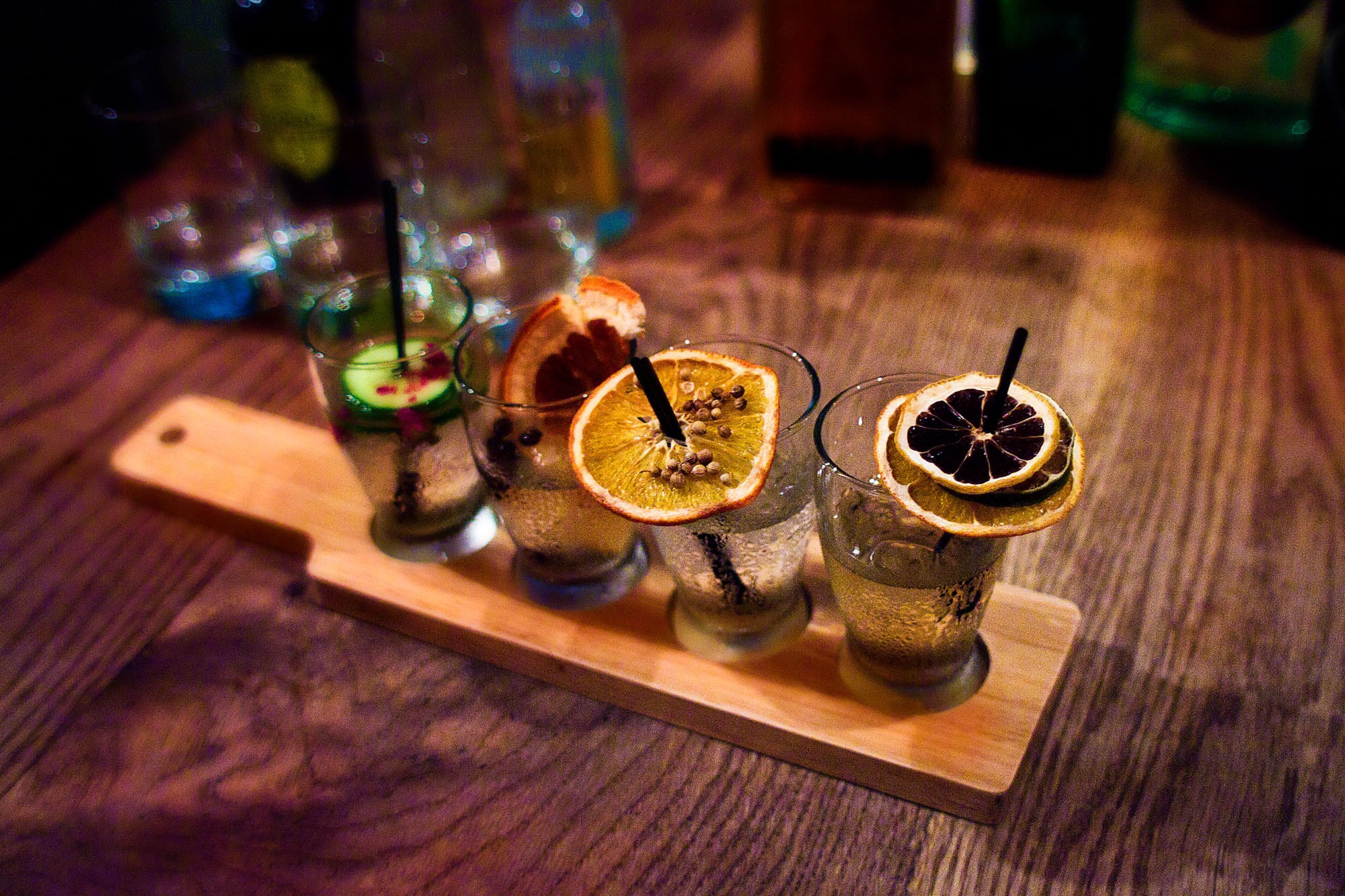
A first-time visitor can order a straightforward pour and have a very good drink. Someone more adventurous can choose a specific gin, a premium tonic, and a garnish profile that changes the drink in subtle but noticeable ways. Cucumber and cracked black pepper create one mood. Orange and thyme create another. Pink peppercorn and grapefruit suggest something else again. None of this feels intimidating. It feels playful and grown-up at the same time.
That matters in mixed social groups, especially among young professionals whose friend circles often overlap with colleagues, clients, old university friends, and partners. Not every setting works for all those combinations. A Gin Bar usually does. It is easy to recommend because the signature drink is recognizable, the menu tends to offer enough variety, and the room itself usually signals that people can dress up slightly or stay smart casual without looking misplaced.
This versatility reduces social friction. Nobody has to overthink the venue. That is a powerful advantage in the current hospitality market, where convenience often shapes demand as much as product quality.
Price matters more than people admit
Trends in nightlife are often explained in cultural terms, but economics should not be ignored. For many young professionals, especially those in major cities, disposable income is under pressure. Rent is high. Dining out is expensive. Travel, fitness memberships, streaming subscriptions, and daily commuting all compete for the same budget. Nights out still matter, but people are more selective about where they spend.
The Gin Bar often lands in a useful sweet spot. Compared with bars centered on rare whisky, premium agave spirits, or high-concept cocktails, gin service can feel more attainable. Even when pricing is not cheap, it tends to feel fair. Guests can order something that looks and tastes refined without jumping immediately into top-tier spending.
There is also a pacing advantage. Gin-based drinks, especially long serves, encourage a slower rhythm. One well-built gin and tonic can last longer than a rushed round of simpler mixed drinks. That can lower total spend over the course of an evening while still delivering a satisfying experience. People may not say that out loud, but they notice it.
Operators notice it too. A strong Gin Bar model can support good margins while still presenting value to guests. When a category works for both sides of the transaction, it has a better chance of becoming a durable trend rather than a passing fashion.
It photographs well, but not in an obvious way
Social media has influenced hospitality for years, yet the most sustainable concepts are no longer the ones that shout for attention. Young professionals, especially those who have grown wary of overtly engineered "Instagrammable" spaces, often prefer visual appeal that feels natural rather than forced. Gin serves are excellent at this.
A balloon glass with quality ice, clear carbonation, a restrained garnish, and good lighting is inherently attractive. A martini in a cold, sharp glass has visual authority. Even a minimalist highball with a citrus twist can look elegant. The Gin Bar environment also tends to lean into materials that age well on camera: marble or wood counters, brass details, muted palettes, shelves of bottles, soft light.
The result is social media friendly without appearing desperate for online validation. That distinction matters. Young professionals tend to be highly image-aware, but they are also quick to detect when a venue is trying too hard. The Gin Bar often avoids that trap by making aesthetics a byproduct of good design and disciplined Gin Bar service, not a gimmick.
Local distilling has helped create a story
Another force behind the rise of the Gin Bar is the expansion of craft distilling. In many cities and regions, local gin producers have multiplied, each with a distinct identity. Some lean into native botanicals. Others focus on sustainability, unusual citrus profiles, savory spice, or floral notes. This gives bars a ready-made narrative and gives guests a reason to care.
Storytelling matters more than it used to, but it has to be credible. Guests are not impressed by vague claims about artisanal quality. They respond better to specifics. A bartender explaining why one gin uses coastal herbs or why another was designed to pair with a drier tonic gives the interaction substance. That kind of knowledge exchange turns a simple drink into a modest experience, which is exactly the scale many young professionals want on a weeknight.
The local angle also aligns with broader consumer habits. Many younger urban guests prefer businesses that feel connected to a place rather than interchangeable from one city to the next. A Gin Bar can express that through bottle selection, seasonal ingredients, and collaborations with nearby distilleries. It creates a sense of belonging, which is a powerful loyalty driver.
The atmosphere supports networking without making it transactional
One of the more practical reasons a Gin Bar is trending among young professionals is that it works for semi-social, semi-professional occasions. Not every meeting belongs in a conference room, and not every career conversation should happen over lunch. People still make introductions, test partnerships, discuss freelance work, and catch up with former colleagues in bars. The venue influences the tone of those conversations more than most hosts realize.
A Gin Bar offers enough structure to feel intentional. Meeting there says, "I chose a place with some thought," but it does not create the pressure of a formal dinner reservation. That matters when the relationship is still taking shape. If the chemistry is good, people stay for another round. If not, one drink is an easy and polite exit.
The acoustics and service style are often better suited to this than louder, more casual venues. A networking conversation dies quickly when everyone has to repeat themselves every thirty seconds. The strongest Gin Bars understand this and build around comfort, not just volume.
I have also noticed that gin itself sends a softer signal than some other categories. Inviting someone for mezcal flights can feel intense. Suggesting a wine bar may create anxiety if one person knows the subject far better than the other. A Gin Bar feels modern, neutral, and open-ended. It gives people enough to talk about, but not so much that the drink becomes the entire event.
Wellness culture has changed what "going out" looks like
It may seem odd to connect gin with wellness culture, but the link is real. Young professionals are not drinking in exactly the same way previous generations did at the same age. Many are more conscious about sleep, hydration, calorie intake, and next-day productivity. That does not mean they avoid bars. It means they choose bars differently.
The Gin Bar adapts well to this shift because it can offer lighter, cleaner-feeling serves. Whether or not that perception always matches the chemistry is another matter, but perception influences behavior. A gin and soda with herbs and citrus feels more manageable to many guests than a creamy dessert cocktail or a sequence of pints. Lower-ABV gin spritzes and half-size aperitif options fit neatly into the same mindset.
Just as important, a well-curated Gin Bar is often better at non-alcoholic and low-alcohol options than older bar formats. Operators who understand modern guest expectations know that one person at the table may want a full-strength martini while another wants a botanical alcohol-free serve in proper glassware. If the venue handles both with equal care, the group stays intact and everyone feels included.
That point is more important than it sounds. Young professionals increasingly socialize in mixed-consumption groups. Venues that cling to an all-or-nothing drinking culture lose relevance. Gin-focused bars, perhaps because the category itself is so botanical and aromatic, have been quicker than many to embrace this broader spectrum.
Design plays a larger role than many owners expect
The modern Gin Bar trend is not driven by liquid alone. Space design matters enormously. The bars that succeed tend to understand that gin invites a certain visual language. Clean lines, visible back bars, thoughtful glassware, and enough breathing room between tables all reinforce the promise of the product.
That does not mean every Gin Bar must be minimal or upscale. Some of the best ones lean warm and intimate, with dark wood, soft leather seating, and a playlist that nods toward jazz, house, or understated soul. Others feel bright, botanical, almost conservatory-like. The point is not a single look. The point is coherence. Guests should understand the venue within a minute of walking in.
Young professionals notice this coherence more than owners sometimes assume. They spend much of their day navigating fragmented environments, crowded transit, open-plan offices, noisy cafes, endless notifications. A bar that feels composed offers relief. Even small details count. Proper hooks under the bar for a work bag. Enough light to read the menu without using a phone torch. Staff who clear water glasses before they become cluttered. A bathroom that is well maintained at 8:30 p.m., not just at opening. These are not glamorous details, but they heavily influence repeat business.
Gender dynamics have shifted, and gin benefits from that
It is impossible to discuss gin's rise honestly without acknowledging how older marketing stereotypes have loosened. Spirits categories were once sold through fairly narrow ideas of masculinity and femininity. Those distinctions have faded, and that change has opened the door for categories like gin to be appreciated on broader terms.
A Gin Bar usually does not carry the same coded energy as a whisky den or a sports-driven beer hall. It can feel more neutral, more welcoming, and more style-conscious without becoming exclusionary. That matters for mixed groups and for solo guests, both of which are increasingly important customer segments in urban hospitality.
The menu architecture often reflects this shift. Rather than sorting drinks into simplistic categories, better bars focus on flavor and mood. Crisp. Savory. Floral. Bitter. Strong. Long. Guests choose based on preference, not identity performance. That is a more contemporary way to present a drinking experience, and it resonates strongly with younger professionals who are generally less interested in old-fashioned status signals.
The trend has limits, and smart venues know it
Not every bar should become a Gin Bar, and not every neighborhood can support one. Trends fail when operators copy surface details without understanding the deeper appeal. A weak gin list, lazy tonic options, poor ice, indifferent glassware, and undertrained staff can sink the concept quickly. Guests may not articulate each flaw, but they feel the difference immediately.
There is also the issue of menu fatigue. If a bar leans too hard into novelty for novelty's sake, the category can become fussy. Too many infusions, too many obscure botanicals, too much garnish architecture, and the original charm disappears. Young professionals may enjoy discovery, but they also value efficiency. They do not always want a dissertation before every drink.
The strongest venues balance depth with clarity. They serve the classics very well. They offer enough range to reward curiosity. They price intelligently. They train staff to guide rather than lecture. And they remember that guests come for the full atmosphere, not just the bottle selection.
From an operational standpoint, there is also a caution around over-indexing on one spirit. If a bar brands itself around gin, it still needs enough flexibility to accommodate a broader crowd. Someone in every group will ask for a glass of wine, a beer, or a no-alcohol option. Refusing that reality in the name of purity is rarely good business. A Gin Bar can have a clear identity without becoming rigid.
Why the trend looks durable
Some hospitality trends burn hot and vanish. This one has stronger foundations. The Gin Bar works because it solves several modern demands at once. It offers approachable sophistication. It supports conversation. It feels premium without always being prohibitively expensive. It fits after-work drinks, casual dates, low-key celebrations, and light networking. It aligns with local craft culture, visual culture, and the growing preference for more thoughtful drinking occasions.
Most importantly, it reflects how many young professionals want to be seen by themselves and by others. Competent but not flashy. Social but selective. Curious but not performative. Interested in quality, yet still practical. Those are not just drinking preferences. They are broader lifestyle signals, and the right venue can embody them.
That is why the Gin Bar continues to gain traction. It is not a novelty vessel for one fashionable spirit. It is a format that understands the current mood of urban professional life. It gives people a way to go out that feels adult, enjoyable, and manageable all at once. In hospitality, that combination is harder to achieve than it looks, and when a concept gets it right, the market tends to reward it.
The Winslow
243 E 14th St
New York, NY 10003, United States
Phone: +1 212-777-7717
FAQ About Gin Bar
How to do a gin tasting?
Start with a small pour and gently smell the gin before taking a small sip. Notice its juniper, citrus, floral or spice notes, then compare how the flavor changes with a little water or tonic. At a gin bar, ask the bartender to explain the selection and botanical pairings.
How to make the best tasting gin and tonic?
Use chilled gin, fresh tonic and plenty of ice. A common starting ratio is one part gin to two parts tonic, adjusted to taste. Choose a garnish that complements the gin's botanicals and stir gently to preserve the bubbles.
What is the smoothest tasting gin?
There is no single smoothest gin for everyone. Perceived smoothness depends on the botanical recipe, alcohol strength, serving temperature and mixer. Describe whether you prefer citrus, floral, herbal or juniper-forward flavors so a bartender can suggest a suitable style.